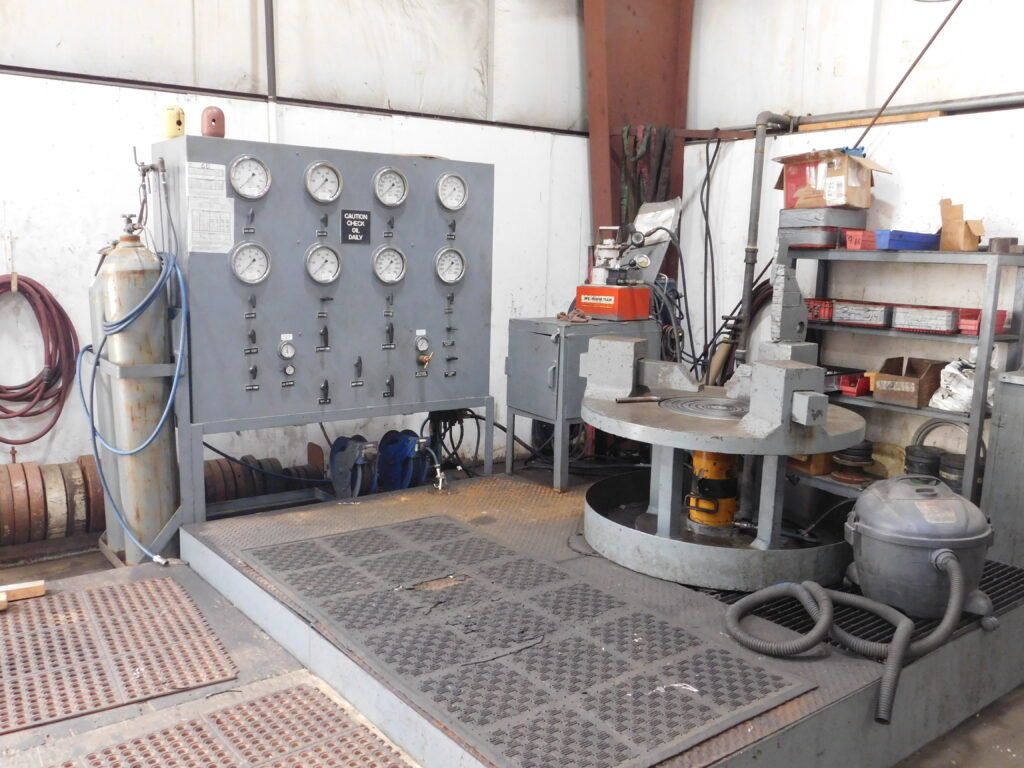
Hydrostatic Testing for Industrial Valves
Hydrostatic testing is considered to be the industry standard in pressure testing, as it uses a nearly incompressible liquid such as water and can be used safely in high-pressure applications. Hydrostatic testing is significant for checking the strength and stability of industrial valves when operating under pressure. This technique is normally utilized under common industry standards (API 598 or API 6D,Testing Standards: Valve Leakage & Ratings) or using customers’ requests or specifications.
Hydrostatic valve testing is a critical process conducted after valve and actuator repairs to ensure the valve’s integrity, safety, and performance. This test involves pressurizing the valve with water to a predetermined level, typically exceeding its normal operating pressure, to identify leaks, structural weaknesses, or defects.
Before testing, Southern Valve Solutions expert valve repair and modification team members ensure all components are properly assembled, and follow the manufacturer’s guidelines. The valve is filled with water, air is purged, and pressure is applied for a set duration. Observations are made for any pressure drops or visible leaks. If the valve fails, additional repairs or replacements may be required.
Following industry standards such as API 598 or ASME B16.34 ensures compliance and reliability. Proper documentation of the test results is crucial for regulatory and safety purposes. Regular hydrostatic testing enhances valve longevity and prevents failures in high-pressure systems, ensuring smooth industrial operations.